Are AI Phone Calls Legal for a Small Business? What the FCC and Florida Rules Say
Yes, AI phone calls are legal for a small business, but the rules depend on which way the call goes. In February 2024 the FCC ruled that AI-generated voices count as an artificial voice under the Telephone Consumer Protection Act, so calls you make to customers with an AI voice need their prior consent, and sales calls need written consent. The ruling does not address calls customers place to you. In Florida, recording any call also needs every party's prior consent. This guide walks through each case in plain terms so you know what to ask before you turn an AI voice on.
News for owners. By Chleb AI Editorial (AI-assisted, reviewed). Published 2026-09-24. 8 min read.

What the FCC decided in February 2024
The Telephone Consumer Protection Act, the federal law behind most robocall rules, restricts calls made using an "artificial or prerecorded voice." For years there was an open question: does a voice produced by AI, including a cloned voice that sounds like a real person, count as artificial? The Federal Communications Commission answered it in a Declaratory Ruling adopted on February 2, 2024 and released on February 8, 2024 (FCC 24-17, CG Docket No. 23-362).
The FCC held that the Act's restrictions on the use of an artificial or prerecorded voice cover current AI technologies that resemble human voices. In practice that means an AI voice is treated the same way a recorded message always has been. The ruling took effect immediately, and the FCC noted it gives state attorneys general another tool against scam robocalls that use cloned voices.
The ruling did not ban AI voices. It placed them inside rules that already existed. If a business was already following the consent and identification rules for recorded messages, the same rules now apply when the voice on the line is generated by AI.
Calls you make with an AI voice: consent comes first
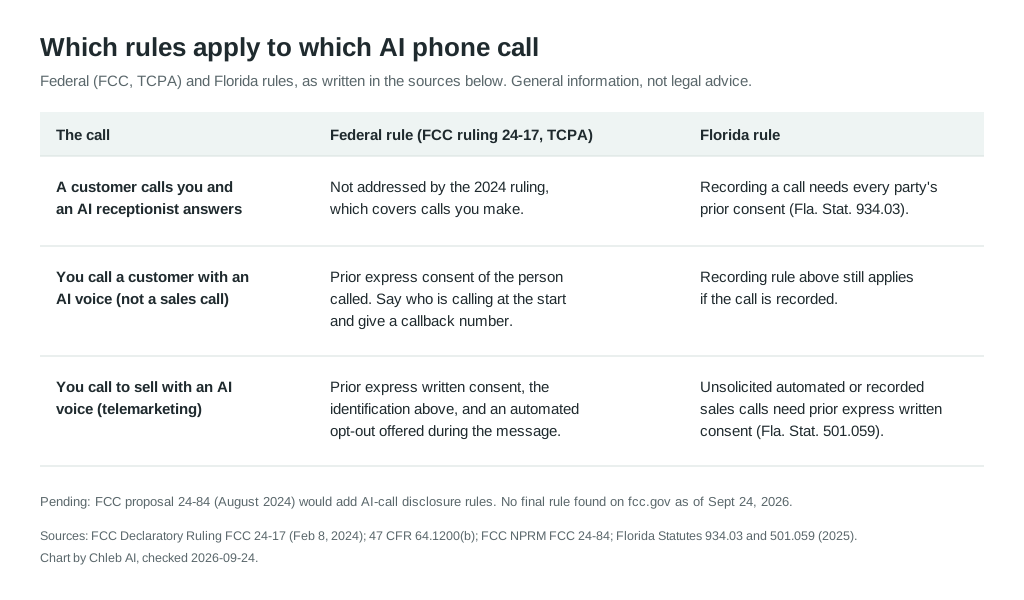
According to the ruling, a caller must obtain prior express consent from the person being called before making a call that uses an artificial or prerecorded voice generated through AI. For calls that include an advertisement or telemarketing, the bar is higher: prior express written consent. Emergency calls are treated separately under the Act.
For an owner, this matters most for outbound campaigns: an AI voice that calls past leads, confirms appointments or pitches a seasonal special. Before any of that runs, you should be able to show that each person agreed to receive those calls, and for anything that sells, that they agreed in writing. A list of phone numbers you collected for another purpose is not the same thing as consent.
Federal rules also say what an artificial-voice message must include. Under 47 CFR 64.1200(b), the message must state clearly, at the beginning, the identity of the business responsible for the call, and must state a telephone number for that business during or after the message. For advertising and telemarketing messages, the rule also requires an automated way to opt out, offered within two seconds after the identification, which adds the number to the caller's do-not-call list.
Calls customers make to you: what the ruling does not cover
Most small businesses meet AI voice technology from the other direction: a customer dials the shop and an AI receptionist answers, qualifies the call and books an appointment. The 2024 ruling is written about calls made to consumers. It does not discuss inbound calls or AI answering systems, so it does not settle questions about them in either direction.
That is not the same as saying anything goes. Other rules still apply to an inbound call, and the one Florida owners hit first is recording. Many AI receptionists offer recording and transcript capture, because those records can help you check what was said and fix the script. Whether capture is enabled and what notice or consent applies must be confirmed for the setup. Recording is where Florida law is strict.
It also helps to be straightforward with callers. The FCC has proposed, but not adopted, rules that would require disclosure when a call uses an AI voice (more on that below). Telling callers up front that they are speaking with an automated assistant costs nothing and heads off confusion.
Florida: recording a call needs everyone's consent
Florida is one of the states that requires all parties to consent before a phone call is recorded. Section 934.03 of the Florida Statutes makes it lawful to intercept a wire, oral or electronic communication when all of the parties to the communication have given prior consent. A violation of the main prohibition is classified as a third degree felony, with lesser classifications for certain radio and cellular cases.
For a business that records calls, the common practice is to say so at the very start of the call, before the caller shares anything, with a short line such as a notice that the call may be recorded. Whether a particular greeting gives enough notice for your situation is a question for your attorney, and it is worth asking before a new phone system goes live rather than after.
This applies whether a person or an AI answers. The recording rule is about the recording, not about who or what is on the line.
Florida: automated sales calls need written consent
Florida has its own telemarketing law, the Florida Telephone Solicitation Act, in section 501.059 of the Florida Statutes. It says a person may not make an unsolicited telephonic sales call that involves an automated system for selecting and dialing numbers, or the playing of a recorded message when the call connects, without the prior express written consent of the person called.
The act allows a person who receives a violating call to recover actual damages or $500 per violation, whichever is greater, and a court may triple the amount when the violation was willful or knowing. For text message solicitations, the statute requires the recipient to reply STOP first, and the sender then has 15 days to stop before a lawsuit can be filed.
For an owner planning any outbound AI calling in Florida, this is the second reason to collect written consent up front: the federal rule and the state rule both point the same way.
What is still pending: AI call disclosure
In August 2024 the FCC issued a proposal (FCC 24-84) that would go further. It proposed defining AI-generated calls, requiring callers to disclose when a call uses AI-generated content, and making sure consumers are told about AI calls when they give consent. It also proposed protecting people with hearing or speech disabilities who use AI-generated voices to communicate, exempting their outbound calls from consent and identification requirements when the call carries no unsolicited advertisement.
As of September 24, 2026, we did not find a final rule adopting these proposals on the FCC's website, so they are proposals, not law. Rules like these can change, which is one more reason to build habits that already meet the proposed standard: say that the caller is talking to an automated assistant, and say it at the start.
A short checklist before you turn on an AI voice
First, decide which direction the calls go. Answering calls customers place to you is a different situation from placing calls to them, and the consent rules in the 2024 ruling are about the calls you place.
Second, if you record calls, put a recording notice at the start of the greeting and have your attorney confirm the wording. In Florida this is the rule most likely to affect a business that only answers calls.
Third, if you will place calls with an AI voice, keep proof of consent for every number, and written consent for anything that sells. Make sure each message says who is calling at the start, gives a callback number, and, for sales calls, offers an automated opt-out.
Fourth, tell callers they are speaking with an automated assistant. It is not required by the 2024 ruling for inbound calls, but it matches where the FCC's pending proposal is heading and it keeps trust intact.
Chleb AI is an AI receptionist and website chatbot for service businesses, with CRM setup, based in Tampa, Florida. It answers the calls customers place to your business, and recording and transcript capture can land in the CRM when enabled and permitted with the required notice or consent, so you can review what was said. If you are weighing an AI receptionist, ask any provider, us included, how the greeting handles the recording notice and the automated assistant disclosure.
Related reading
Sources
- FCC, Declaratory Ruling FCC 24-17, AI technologies and the TCPA, released 2024-02-08, checked 2026-09-24
- FCC news release, FCC makes AI-generated voices in robocalls illegal, checked 2026-09-24
- FCC, Notice of Proposed Rulemaking FCC 24-84 on AI-generated robocalls and robotexts, checked 2026-09-24
- Federal Register, Implications of AI technologies on protecting consumers from unwanted robocalls and robotexts, 2024-09-10, checked 2026-09-24
- 47 CFR 64.1200, delivery restrictions, via Cornell Legal Information Institute, checked 2026-09-24
- Florida Statutes 934.03 (2025), interception and disclosure of communications, checked 2026-09-24
- Florida Statutes 501.059 (2025), telephone solicitation, checked 2026-09-24
How this article was made
Written with AI assistance and reviewed by the Chleb AI team before publishing. Every factual claim links to its source above. Illustrations are AI-generated, not photographs; cover cards are set in type; charts and diagrams are built from the public data they cite. This is general information, not legal, financial or tax advice. Found an error? Tell us at chleb@chleb.ai or through the contact page and we will correct it and note the correction on this page.
More stories
Questions readers ask
Is it legal for an AI to answer my business phone?
The FCC's February 2024 ruling on AI voices covers calls made to consumers and does not address AI systems that answer calls customers place to you. Other rules still apply to those calls. In Florida the main one is recording: recording a call needs every party's prior consent under section 934.03, so a business that records should give notice at the start. Ask your attorney to confirm the wording for your business.
Can I use an AI voice to call my customers?
Yes, with consent. Under the FCC's 2024 ruling, calls that use an AI-generated voice are treated as calls with an artificial voice, which require the prior express consent of the person called. Calls that advertise or sell require prior express written consent. The message must identify your business at the start and give a callback number.
Do I have to tell callers they are talking to an AI?
The 2024 ruling does not require a disclosure on calls customers place to you. The FCC proposed disclosure rules for AI-generated calls in August 2024, and as of September 24, 2026 we did not find a final rule on the FCC's website. Telling callers at the start that they are speaking with an automated assistant is simple and avoids confusion.
What happens if an AI sales call breaks Florida law?
Under section 501.059 of the Florida Statutes, a person who receives an unsolicited automated or recorded sales call without prior express written consent can recover actual damages or $500 per violation, whichever is greater, and a court may triple that for willful or knowing violations.
Does the recording rule apply if a person answers instead of an AI?
Yes. Florida's all-party consent rule in section 934.03 is about recording the conversation, not about who answers. It applies the same way to a human receptionist, an answering service or an AI receptionist whenever the call is recorded.
Is this legal advice?
No. This article summarizes public rules as of the date shown, with links to each source. Rules change and every business is different, so confirm your greeting, consent language and calling plans with an attorney licensed in your state.